
Sketches, 2026
Experience is not what organizations design. It’s what people remember.
Where something important is broken, or the answer doesn't exist yet.
My first day at Accenture was on the T-Mobile campus in Seattle.
T-Mobile had just declared war on its own industry — no contracts, no hidden fees, a level of service the industry had never delivered. The brand had changed. The experience hadn't. There was no design team when I arrived, and ten development teams in India were waiting for designs that didn't exist yet.
That is where I do my best work. I listen until I understand what's actually needed. I build with the team what the work requires. And I don't leave until it ships and people are using it.

The through-line is growth.
I’ve spent my career creating products and services people love, designing future businesses, and building the organizations that make both last.
SwiftTerm for Symetra. Life insurance built for a generation the industry had never designed for. Strategy to market in months, a customer covered in eighteen minutes.
T-Mobile. The Un-carrier promise made real across every channel - website, stores and call center.
Geisinger. A single digital door across insurance, care, pharmacy and wellness, for three million patients a year.
YouTube. NFL Sunday Ticket support, powered by AI and backed by a human. Roughly 16% autonomous resolution during live games, now scaling across Google.
Two years ago, Accenture Song asked me to build a customer service experience practice from scratch. I built and led it to fifty people designing and deploying agentic AI in customer service at enterprise scale, and to a billion dollars in earned annual revenue across FY24-25. The argument I brought to every room: that reducing cost and improving experience aren't in tension. That service, built right with AI, becomes a growth engine. I proved it.
Three questions.
What shape are you? The Theory of Moss
Where does it break? The Undesigned Middle
What do you build? Built for Every Person
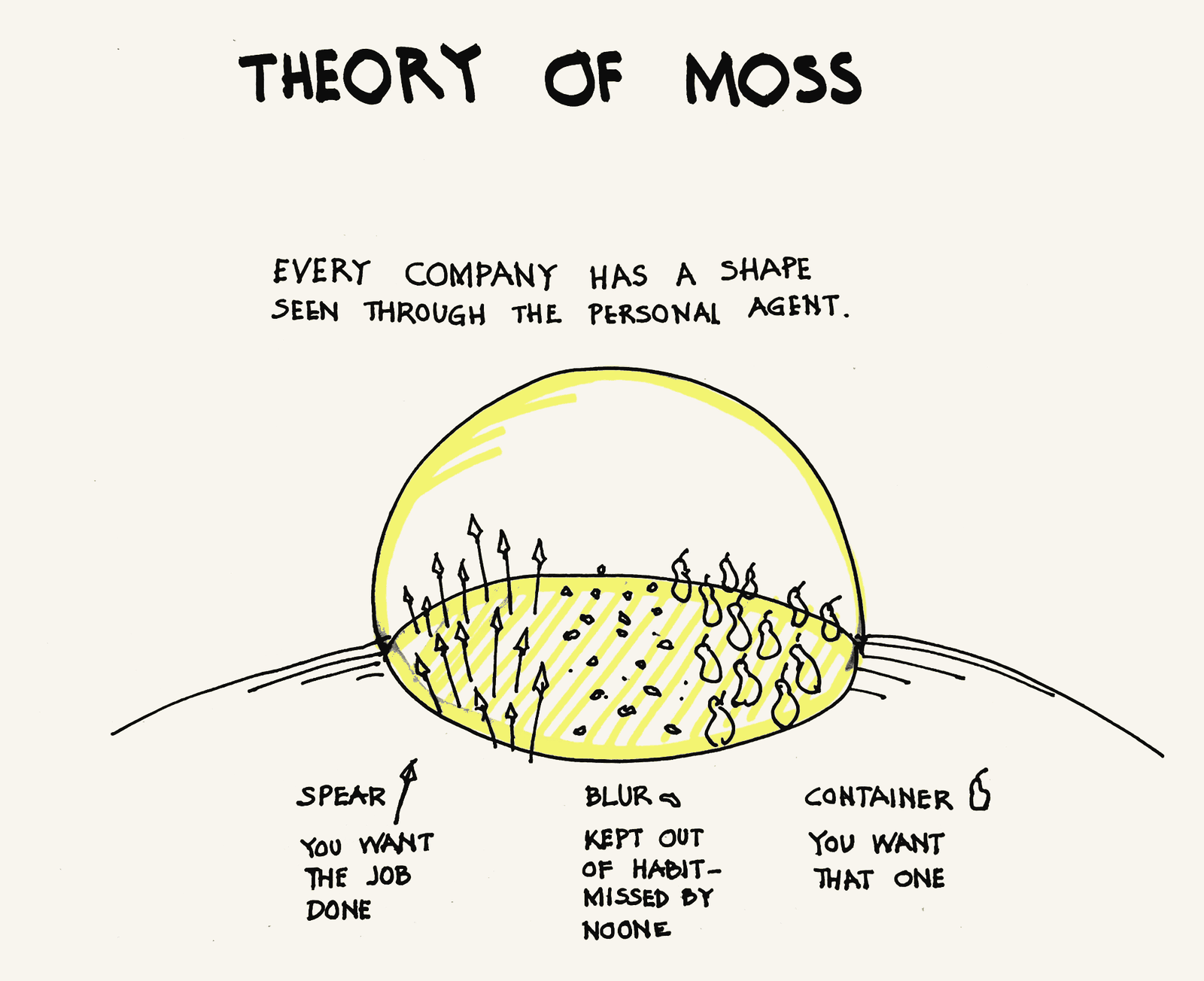
The Theory of Moss
What a company measures and what a person actually receives have never been the same thing, and only one side could ever see both. That is what ends now. The personal agent reads what a company did, not what it said. I wrote down what I think happens then — which companies survive it, and which will quietly disappear.
The Theory of Moss →
The Undesigned Middle
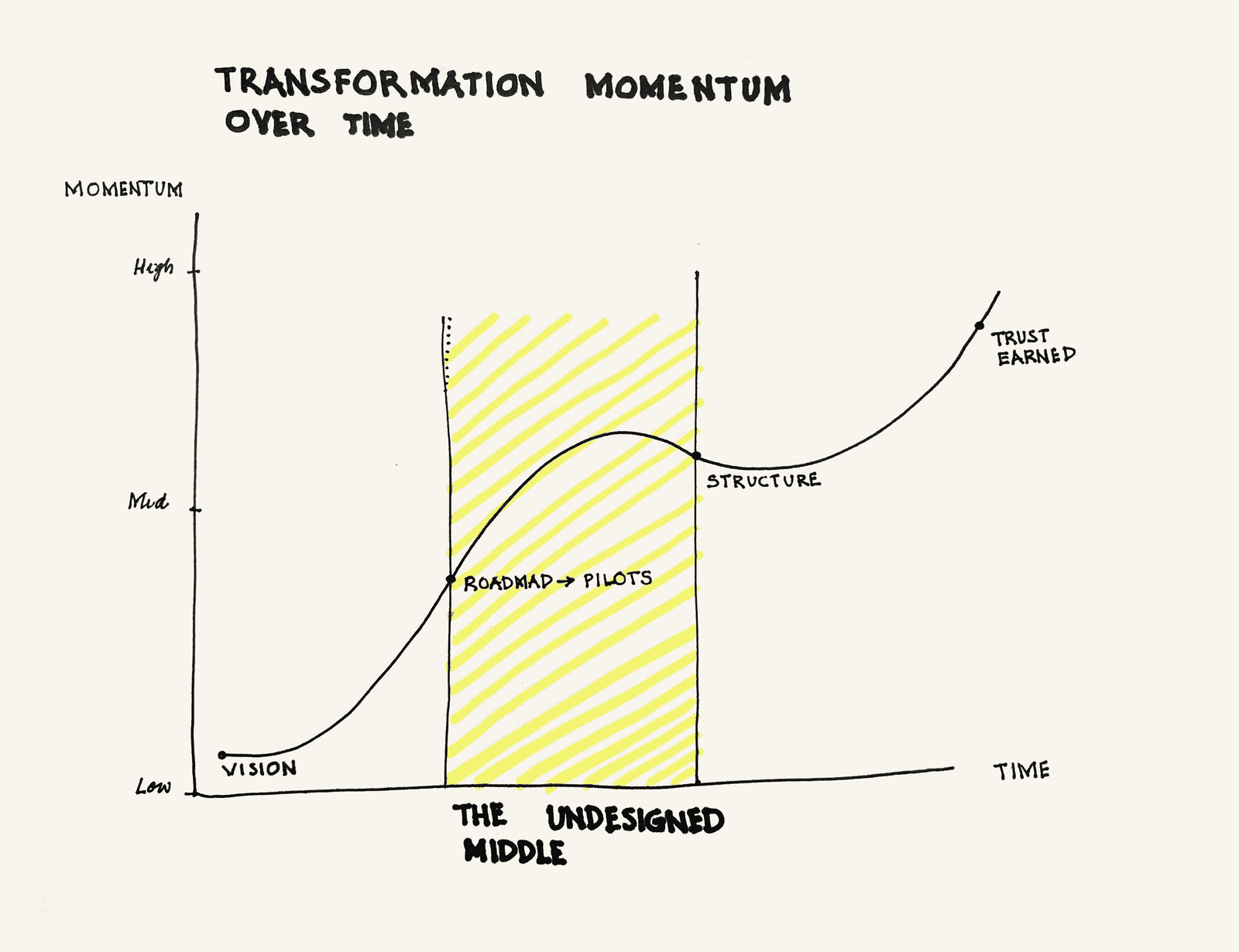
One of the world's largest logistics companies had two programs running in parallel. One team was fighting to restore the basics: on-time delivery, fast resolution, the reliability that trust is built on. Another was building the AI transformation agenda. Both were real. Both were urgent. Neither had a line to the other.
That gap between the transformation vision and the customer who just needs the shipment to arrive is where AI investments lose their return. The technology performs. What's harder to design for is everything around it: the handoffs, the moments it reaches its limits, the trust that erodes while the metrics look fine.
Do you actually know these people, or do you know their data?
Does what you know about them change what the system does?
Who owns the outcome when your system gets it wrong?
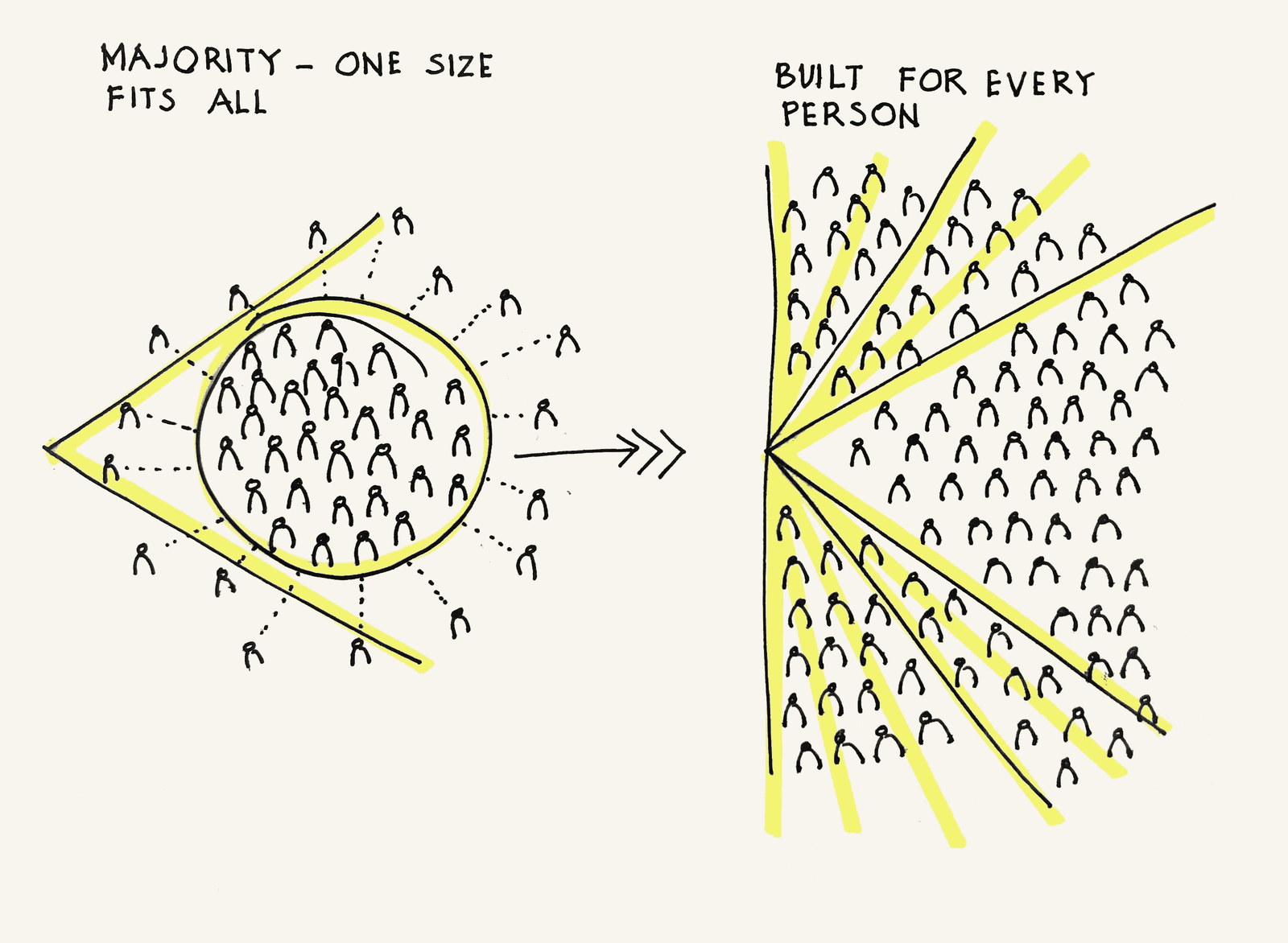
Built for Every Person
The woman who could not go to the child support office because doing so would reveal her location to an abusive partner. The team called her an edge case. She was a person the system had never been built to reach.
Designing for the center and managing exceptions around it was the only architecture ever available, because reaching each person on their own terms cost more than it returned. AI makes that obsolete.
I wrote down nine experience principles that have always been true — and how, for the first time, a system can serve each person as well as it serves the majority.
AI doesn’t remove complexity. It exposes it.
That's the pattern I kept seeing across deployments. The technology worked. What wasn't designed for was everything around it — the moments it couldn't handle, the humans who had to pick up where it left off, the trust that eroded quietly when no one was watching. That's the layer most organizations aren't designing for.
I came to this through architecture, which trains you to hold the whole system before touching any single part. And through graduate work in design and computation, where I learned that when something isn't working, you don't push the walls. You go back to the algorithm. That instinct has traveled into every brief, every deployment, every room where the real problem turned out to be somewhere other than where everyone was looking.
What building the practice proved
Accenture Song NA Customer Service Experience Lead | Managing Director
Accenture's Chief Design Officer — the co-founder of Fjord, someone who had spent his career arguing that design needed a seat at the most senior table — saw something nobody was acting on. One of the largest service transformation businesses in the world had no experience design voice at the level where AI strategy was being set. I took on the mission, and built the experience capability at the center of it, working across strategy, technology, and operations inside one of the world's largest professional services organizations.
Building it meant starting with a multidisciplinary team who weren't sure customer service was their territory. My first job was to reframe what the work actually was: to provide the right support to people when they were frustrated, confused, or needed help for themselves or someone they loved. A quick answer when that's enough. A real person when it isn't. That was the why. The AI was how we delivered it at scale.
“I love the way you inspire me to maintain that relentless focus on customer experience. You should be incredibly proud of the team and culture you built.”
Des Tillman · Americas Lead, Accenture Song Customer Service Practice
The team learned conversation design, and worked at the intersection of experience and technology in ways the broader organization was still figuring out.
At Accenture, promotions don't come from managers — they come from account leaders who nominate and rank the people who made their engagements better. Nine promotions from a team of fifty means nine account leaders, in competitive spaces, put their name behind these designers. That is what the team became.
At Accenture you can be part of a team. You can be aligned to a group. What this became was something harder to build and rarer to find — a community. That's what I'm most proud of.
“You didn't just manage a team; you nurtured a community. You listened, you guided, and you championed careers with compassion and purpose."
Cindi Ingraham · HR Lead, Accenture Song NA Customer Service Practice

Me, skydiving in California
Every project begins with a reframe
The moment I understood what was actually being asked, and why the answer to the wrong question would not be enough. These are those stories.
On Finding Miles Davis →
YOUTUBE
Defined how YouTube NFL Sunday Ticket's support experience — powered by AI, backed by a human — would work
Concept to handoff in 4 months, ready before the NFL season opened
Designed for the customer — self-service where it served them, a human agent always available the moment they asked for one
Designed to scale, with new intents and products scoped at launch
Request full case study →
Have a password? Enter now →
HPE
Defined the product roadmap and launched the first app for HPE's global partner ecosystem — because partners who can see what's happening trust the system more, and sell more
Built blueprint grounded in research with customers, partners, and employees, developed with 100+ senior HPE leaders
Adopted by the CEO as a reference for how HPE would compete
Led the launch of HPEGo — enabling real-time order visibility for the first time
Request full case study →
Have a password? Enter now →
MITSUBISHI
The brand Mitsubishi owners love. The website that finally showed everyone else why.
57% sales increase in three months, against a 6% industry average
Full experience available across every device, at a moment when the industry was still debating whether mobile deserved it
Build & Price rebuilt to connect what buyers wanted with what was actually available at their local dealer
Request full case study →
Have a password? Enter now →
ACCENTURE
Redesigned how a global firm listens to its most important relationships.
360 Listening — 55 C-suite conversations, paired with the account teams on the other side of those same relationships
Findings presented directly to the CEO and global leadership team
The research became the foundation for Accenture's first dedicated client success function
Request full case study →
Have a password? Enter now →
MORE OF THE WORK
Meta · Cisco · T-Mobile · FedEx · Wells Fargo · Symetra Insurance · Schwab · State Fund · Kaiser Permanente · Geisinger · PG&E · Adobe · Toyota · Mitsubishi · AutoTrader · L'Oréal · Epson · State of New Mexico