
00. Redesign of Mitsubishi Motors
00. Redesign of Mitsubishi Motors
CHALLENGE
Competitive marketplace. Limited brand awareness among non-owners (with a small but incredibly loyal owner segment). Big drop in dealership presence (388 in 2012 vs. 641 in 2004). Competitor budgets 20X.
INSIGHT
Mitsubishi is Automotive's best kept secret
While talking to current Mitsubishi owners, we found diehard fans. Mitsubishi Motors has a rich heritage of rally car races and building innovative and highly-efficient cars, but competition has grown in their segment. Capturing the attention of younger buyers is increasingly difficult.
IDEA
Provide a bold, new way to experience car shopping.
Leverage the website to tell the story of Mitsubishi to the uninitiated
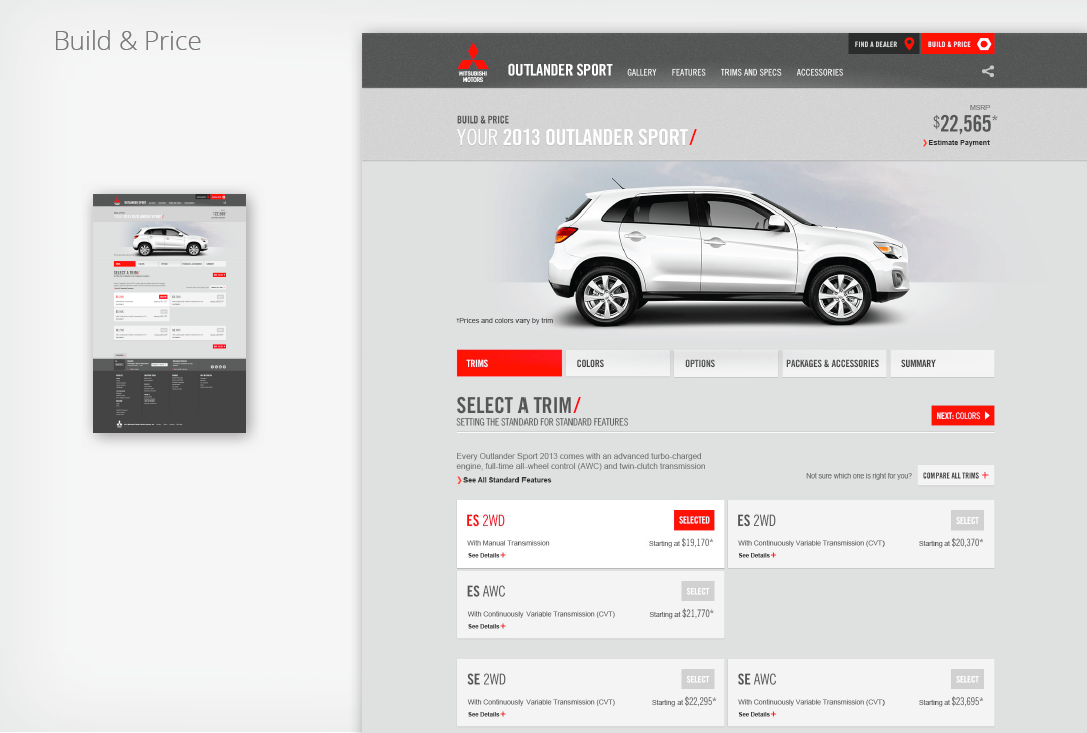
Provide realtime, contextual information to transform the Build & Price experience
Engage with owners via timely, relevant information and local events
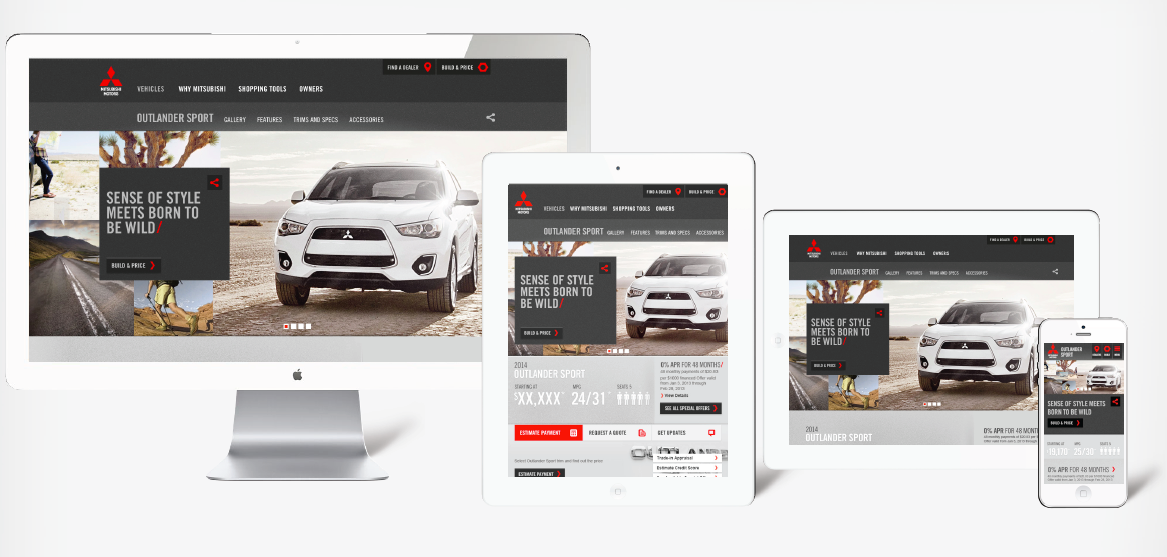
Build a responsive site that provides one seamless experience, across all devices
IMPACT
57% Increase in Sales. Improved JD Power ranking. Finalist for 2 OMMA awards.
Sales are up by 57% for March-May 2014 (vs. 6% increase industry-wide)
MitsubishiCars.com moved up 12 positions on the 2014 JD Powers Manufacturer Website Evaluation Study, with an above industry average for website appearance and navigation.
The site is a finalist in 2 categories for the 2014 OMMA awards, including Website Excellence (Automotive) and Integrated Online Campaign (Automotive)
Email signups have more than tripled (with a subsequent 3% conversion to sale)
Web to dealer conversion is up 30% form previous site.
Current owner visits have more than doubled.
VIEW THE SITE→
REDESIGN OF MITSUBISHI MOTORS
MY ROLE ON THE PROJECT
I led the UX team on the vision and design for the responsive site, developed during the recent redesign of the MitsubshiCars.com website (launched in January 2014). In addition, I was a key member of the Leadership Steering Committee who met with the Mitsubishi Executive Team, comprised of C-level executives on a monthly basis to report progress and recommend initiatives to drive business goals.
I was also part of the initial team that pitched and won this account.
01. There is a fundamental shift in Auto Shopper behavior
01. There is a fundamental shift in Auto Shopper behavior
Discovery & Research
We kicked off the project by diving into research & discovery process. We started by studying the market, the needs and the opportunities.
What are the current pain points? How can we improve the shopping experience? Why do owners rarely come back to use the site post-purchase?
Today's Auto Shopper
According to the Google Automotive ZMOT study, auto shoppers use on average 18.2 different source of information – from TV, news articles, online, family, etc. to finally form their decision.
Throughout their journey, customers increasingly rely on digital channels, for example: checking the brand site, reading reviews, and visiting social networks and community forums in the consideration phase. Recent insights have revealed that more than 50 percent of customers make their decision online, emphasizing the importance of managing the online channel for car makers.
Increasing Role of Digital
The increasing role of digital channels in the purchase decision dictates a need for marketers to deliver a new, highly effective, targeted, and real-time approach to customers.
Younger car buyers are waiting longer to visit dealerships in person, choosing instead to conduct more research online.
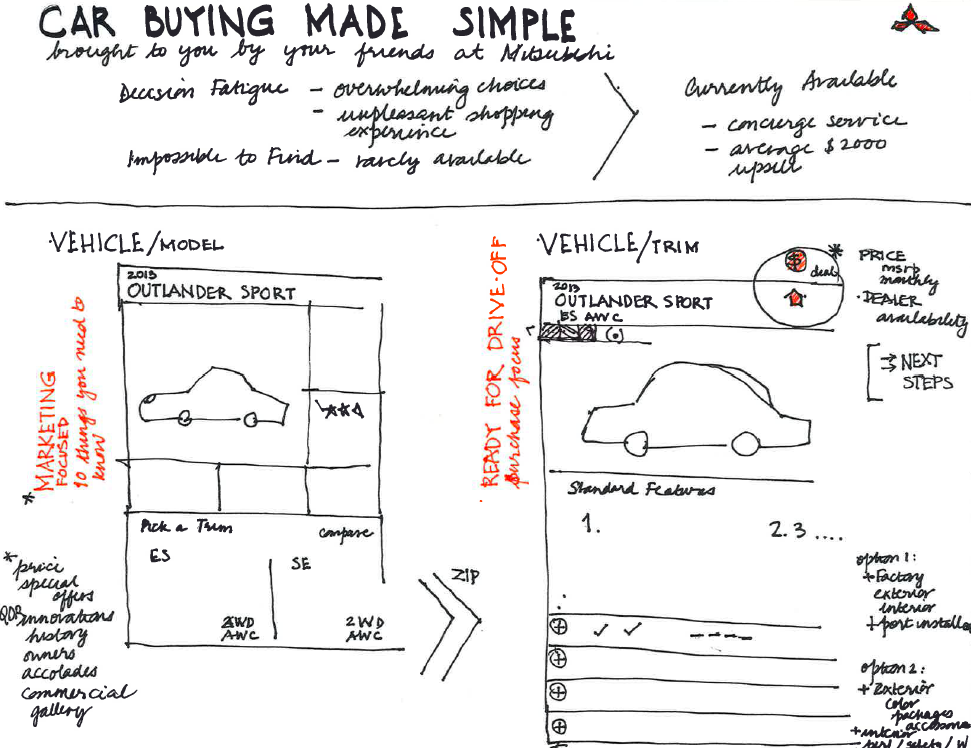
People are visiting the Build & Price tool an average of 6 times before purchase.
Site Map
Site Map
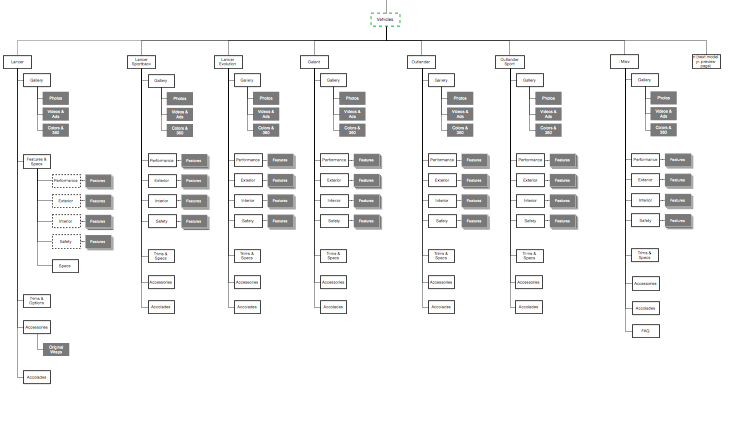
Guided by the research and analysis, we moved next to defining the project requirements and the site map.
Features & Functionality
The Features & Functionality exercise where things become real when faced with the questions: What’s possible? What’s appropriate?
We captured information about target audience, technical parameters, project schedule, etc. into formalized Project Requirements.
Content & Flow
Then came the Site Map, where we organized the content to flow easily between the consideration and purchase process.
Site Map (showing Vehicle section here)
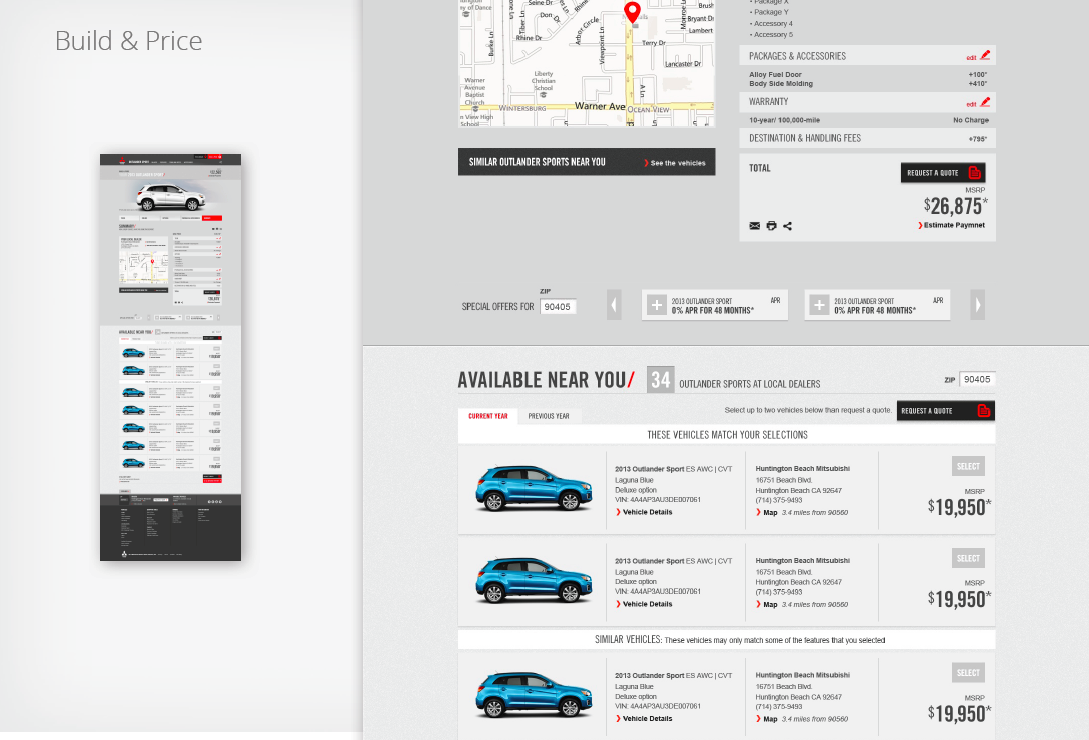
03. Build & Price, Re-imagined
03. Build & Price, Re-imagined
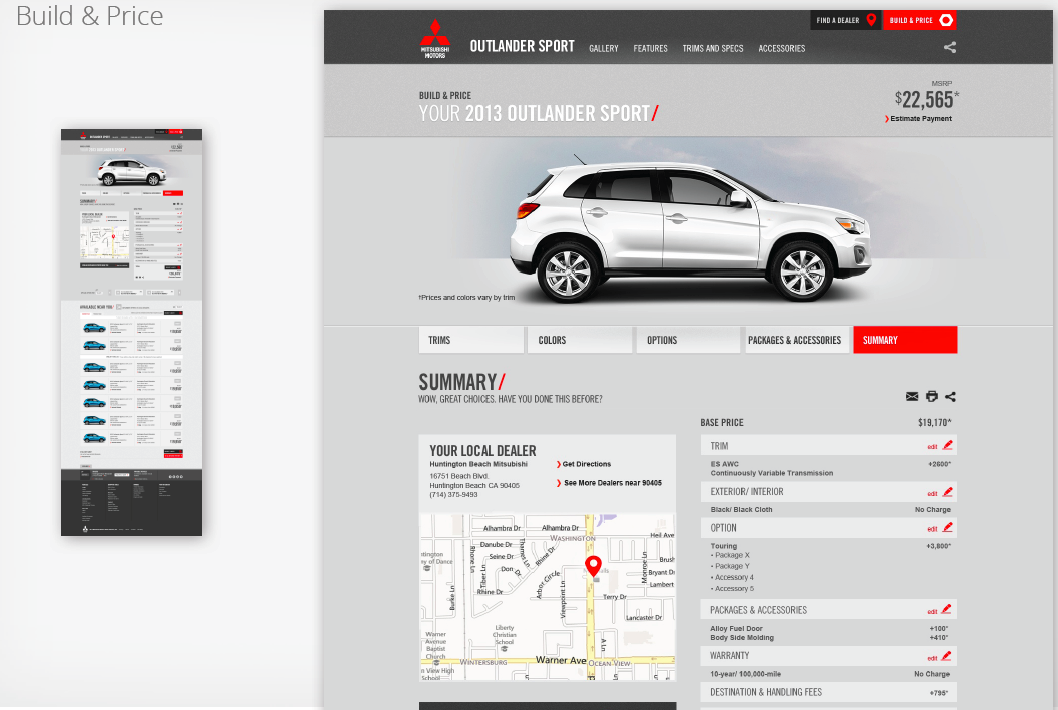
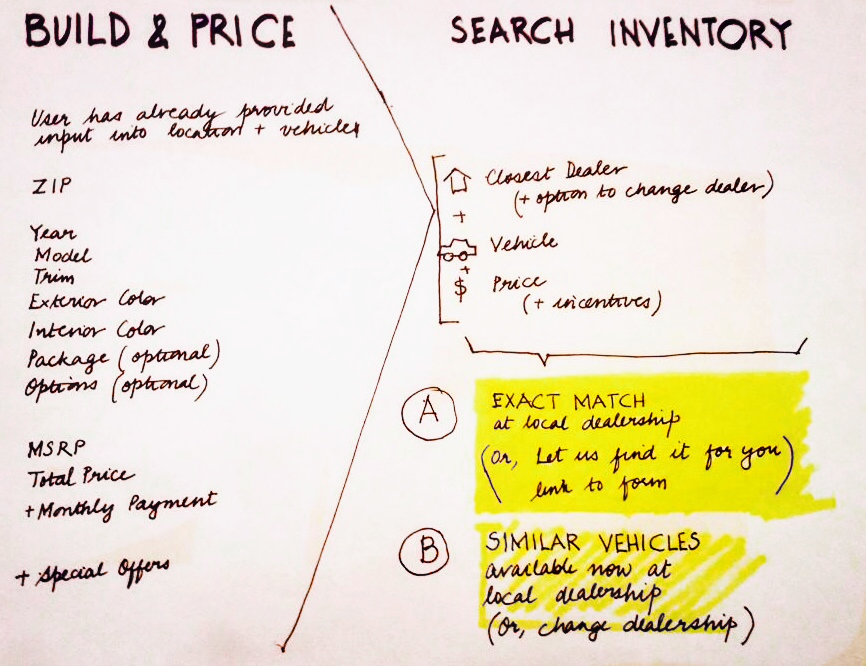
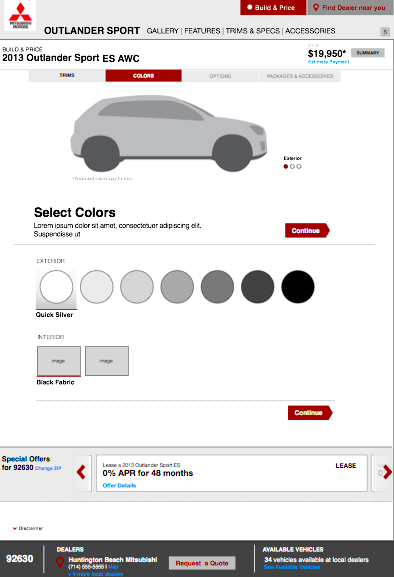
The Build & Price tool was designed to serve both the new and returning audience. An agile, responsive interface offers quick, real-time access to local dealer and matching available vehicles.
Intelligent
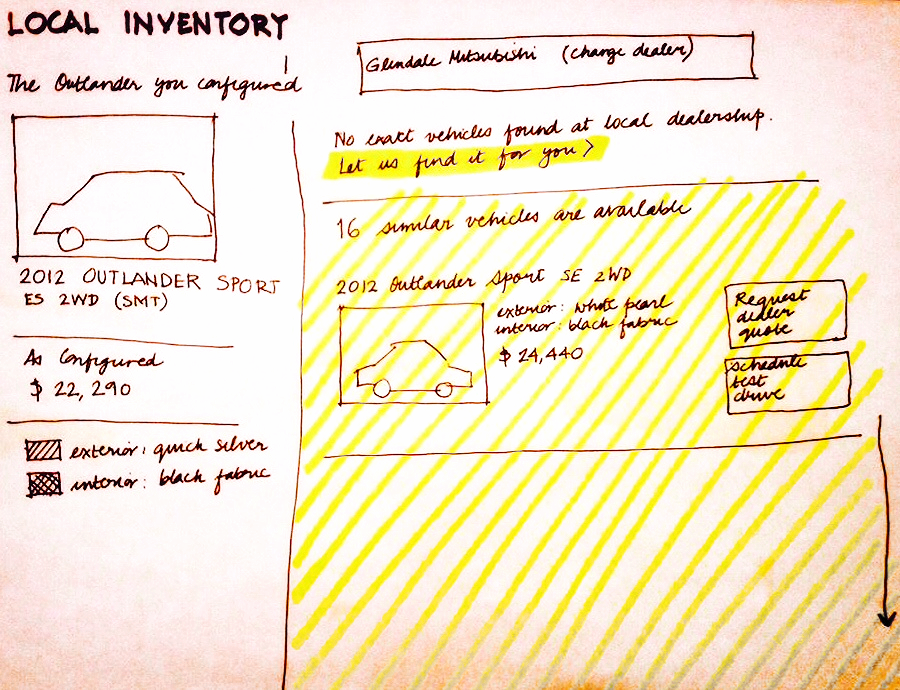
With the initial user-entered ZIP and search criteria, the site can show the closest local dealer and available inventory as part of the sticky footer.
Aware
Car buyers are always looking for deals. The site shows the best relevant offers, in real-time, based on the user’s location and preferences.
Suggestive
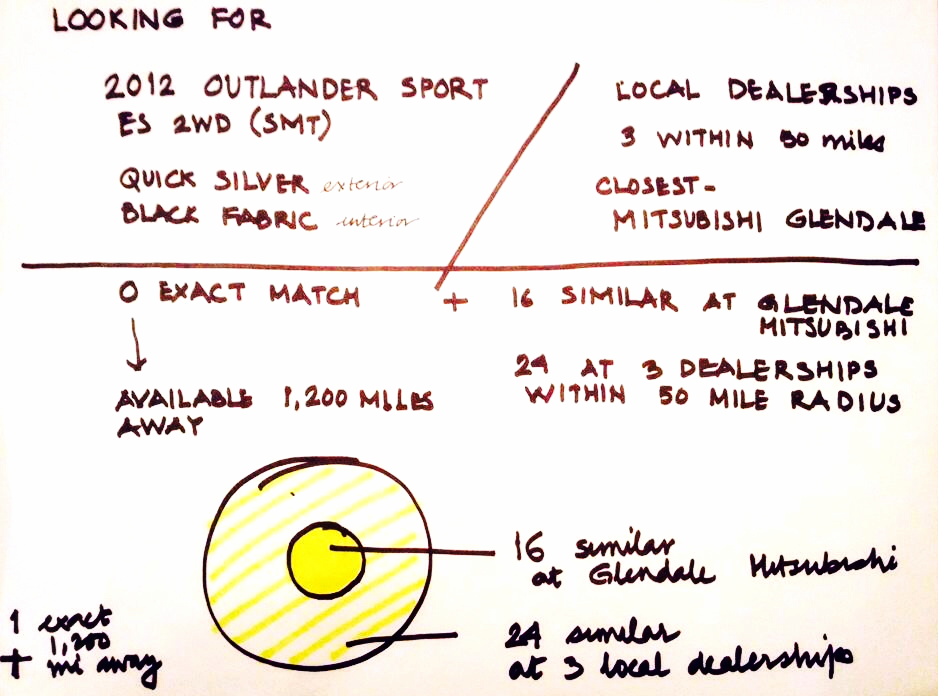
Sometimes people can’t find vehicles that match their exact configuration. Instead, the site suggests other vehicles that are a close match.
04. Smart responsive design
04. Smart responsive design
Designing across platforms, each with a seemingly infinite combination of size, speed and orientation is tricky business. But in order to reach our audience wherever they may be, it was critical that our site work seamlessly across devices- and support multiple scenarios.
HOME
VEHICLE TEMPLATE
We added annotations to these wireframes to define content and functionality, and capture any differences across devices.
05. How do users like the proposed design?
05. How do users like the proposed design?
Do responsive designs better serve user needs?
We conducted 3 rounds of user testing during the design process, including one focused on studying our target audience's reaction to the proposed responsive site.
Desktop remains a favorite
Regardless of order in which the device was presented to users during testing, most users expressed a preference for desktop to complete tasks (e.g. look up vehicle information).
However the effective mobile design and access to all content and functionality encouraged more users to use the mobile
"I prefer desktop, but I like the option of a good mobile site.This is a good mobile site....it's easy to use and clear."
Some tasks are better on the mobile
In addition to tasks that are commonly perceived as mobile-friendly (e.g. get directions, or call a dealer), people appreciated the convenience and flexibility of starting a task on one device and finishing it on another.
Popular mobile tasks included:
- Review available vehicle inventory - with an option to locate nearest dealer
- Save configured vehicle, to share and use at dealership during purchase
- Get directions to or call a dealer
A rich mobile experience promotes return visits
People expect to find a different experience and reduced functionality on the mobile site for automotive sites.
It took a minute or two for people to see, and appreciate, having access to the same content and functionality across devices.
"I love it (mobile site). It has everything my desktop has...."
06. Capturing the spirit of Mitsubishi through Design
06. Capturing the spirit of Mitsubishi through Design
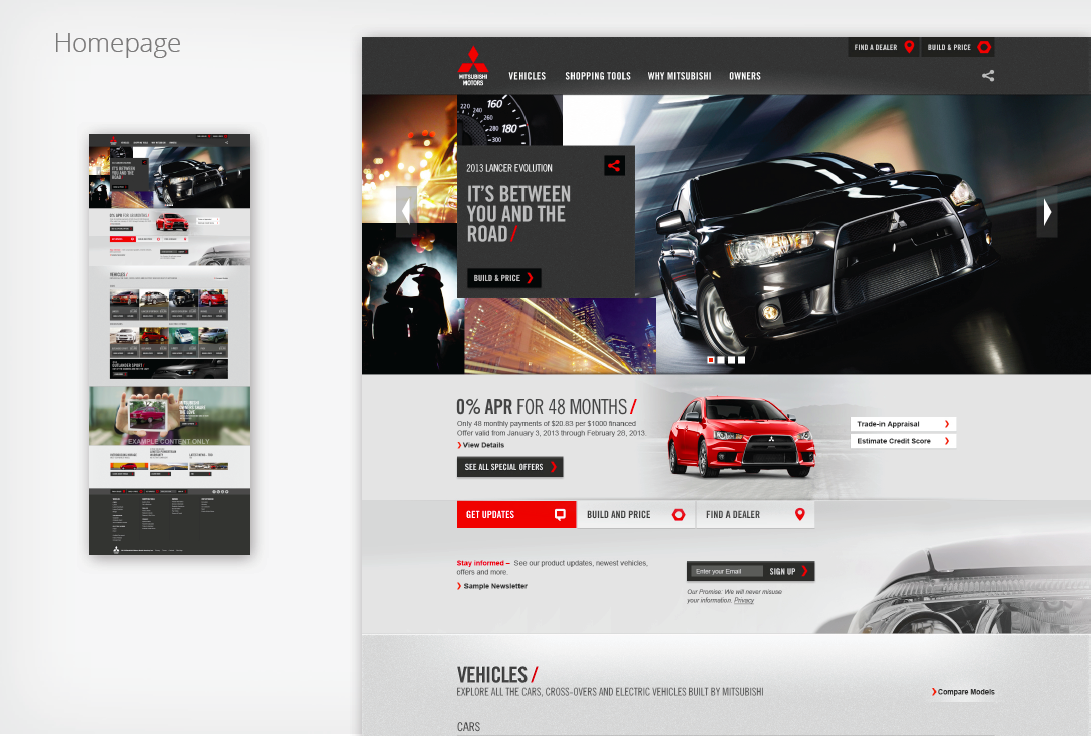
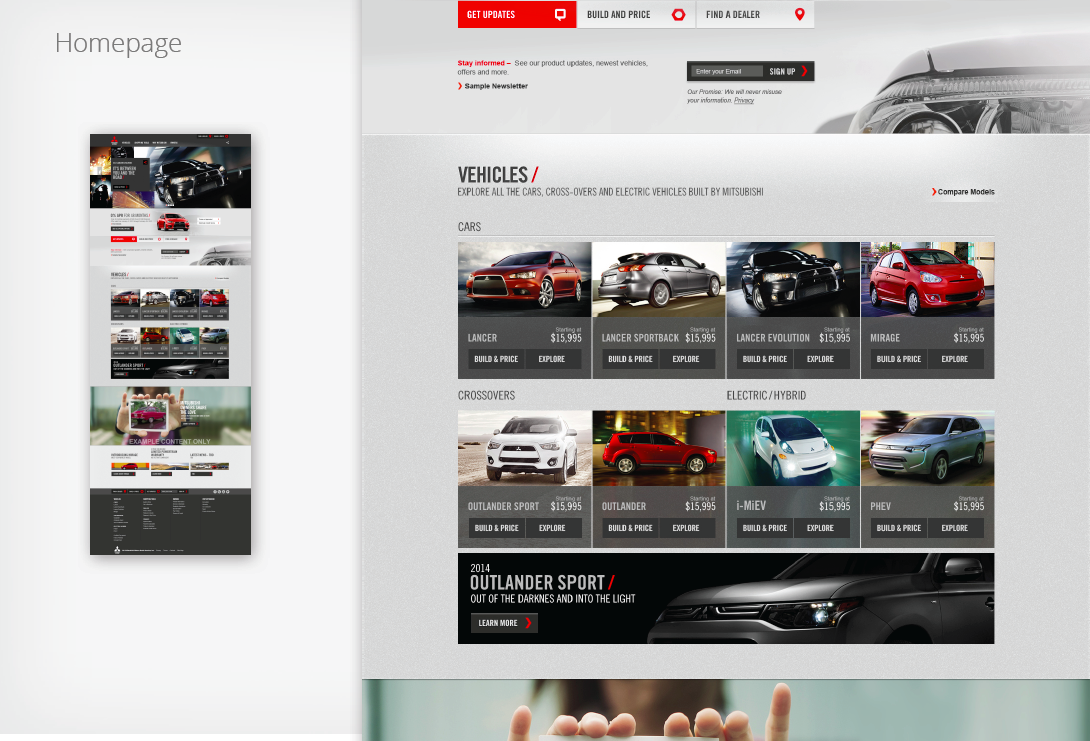
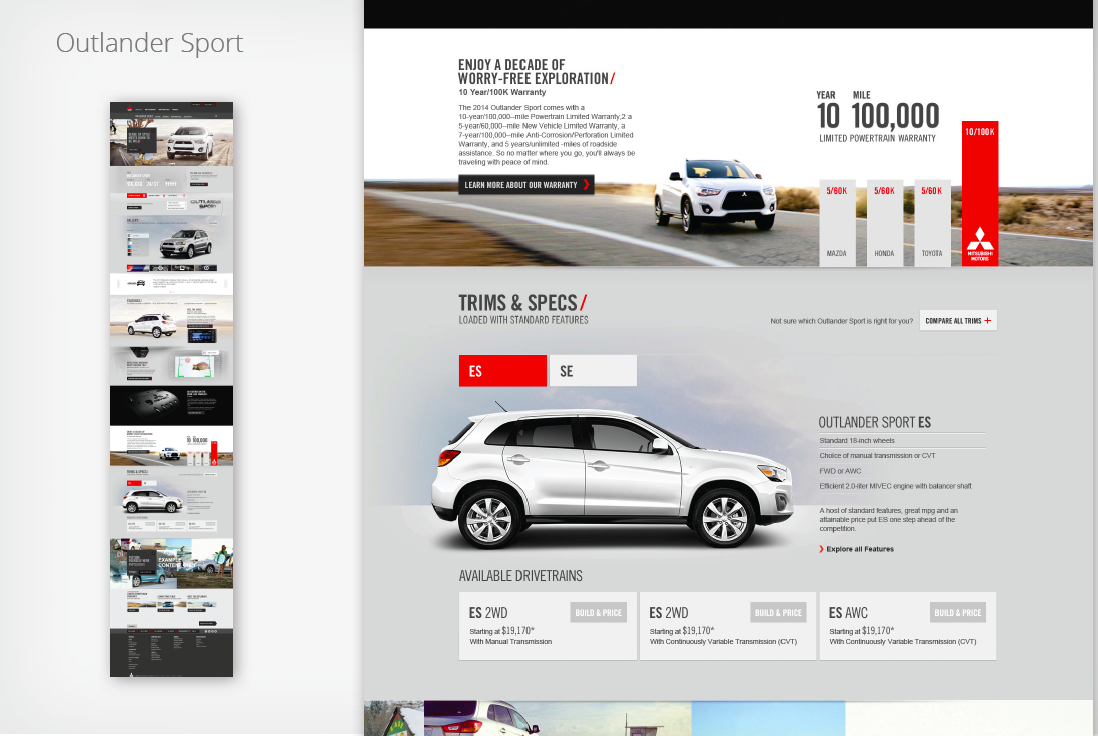
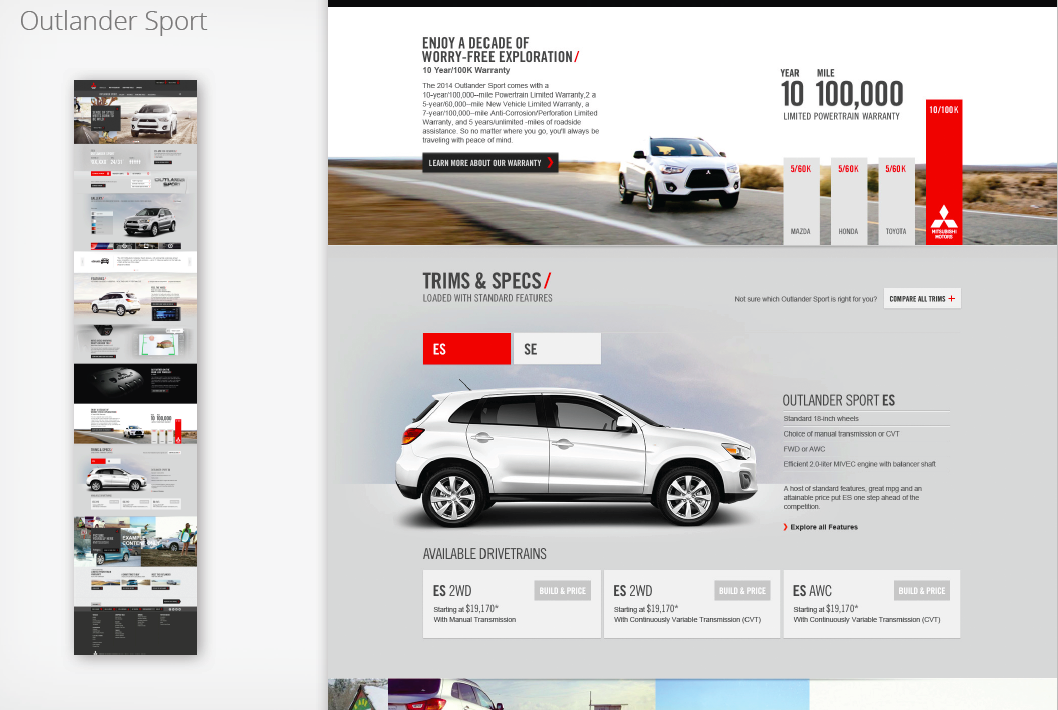
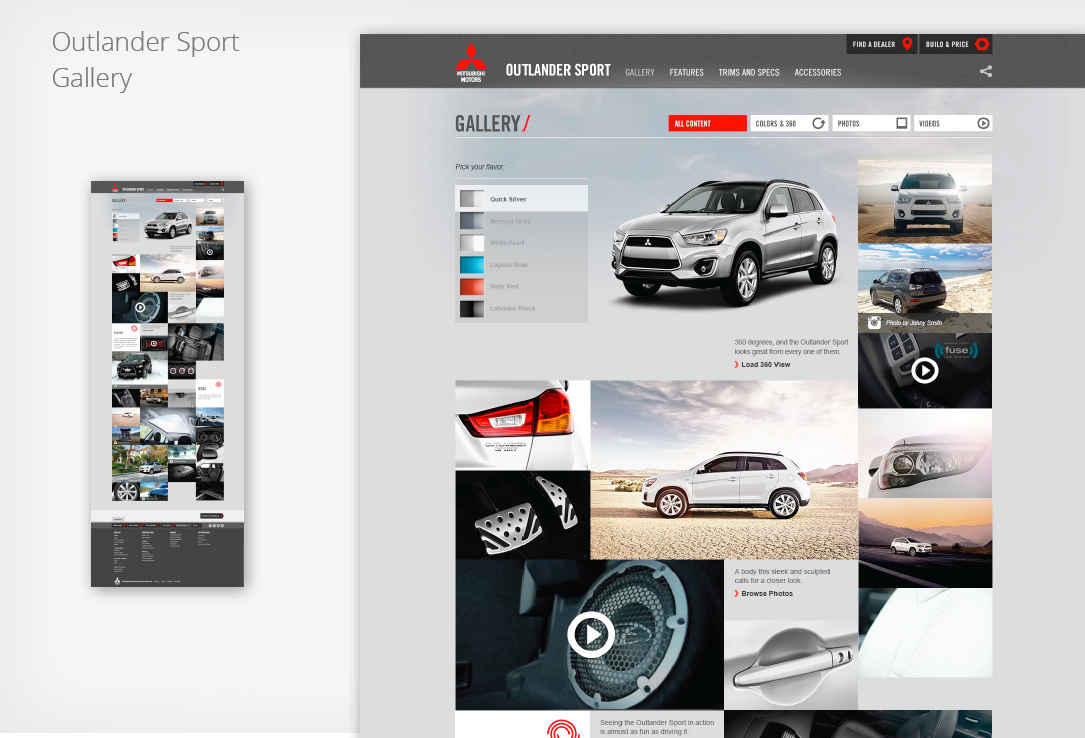
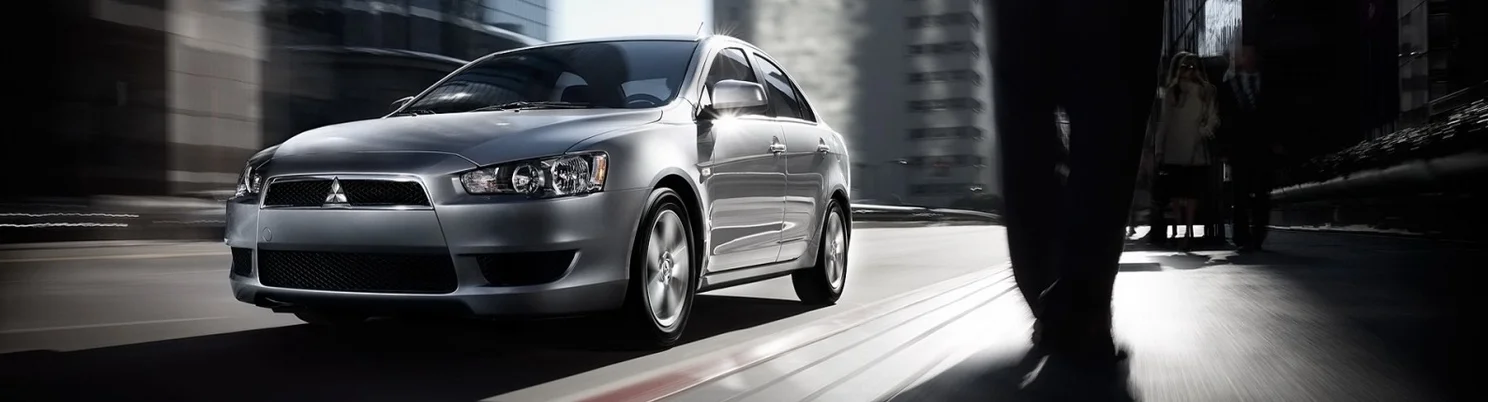
Imagine stunning high-definition images paired with insightful, useful information about the the vehicle you are considering. The design team put together a simple, beautiful site that captures the unique eclectic and adventurous spirit of the Mitsubishi brand.