
May 2026
Notes from a kitchen — and every room since
Anuradha Sachdev built and led a fifty-person practice that put agentic AI into production at enterprise scale by early 2024. This is what that work revealed.
On Finding Miles Davis
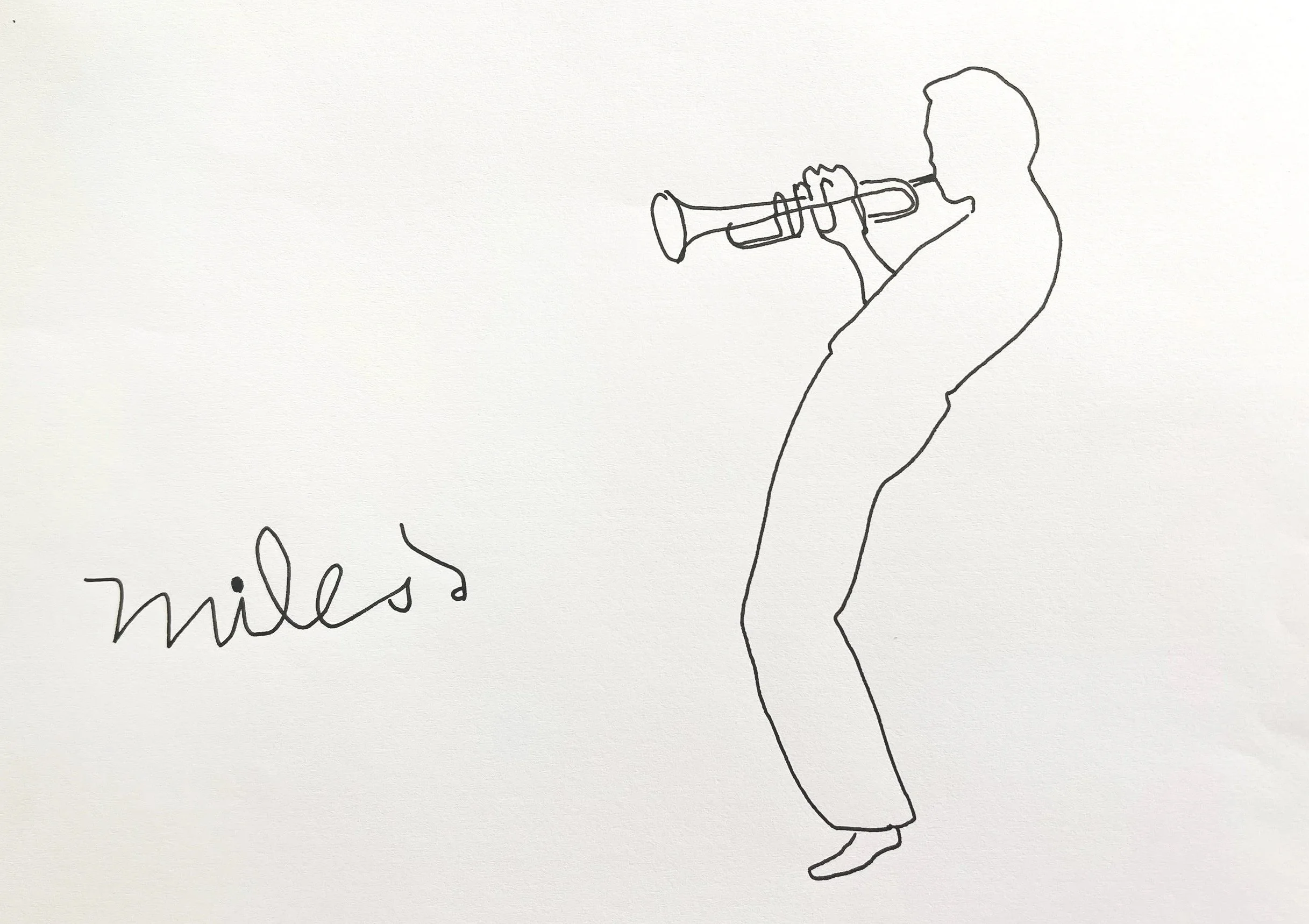
There was a photograph of Miles Davis on the wall of the kitchen at Eleven Madison Park. I didn't know why it was there. I wanted to find out.
The New York Times had given them four stars the day before. One of only six restaurants in the city to hold that. I didn't know that when I was there. I found out later, when I went looking.
The kitchen was calm. A team that knew their jobs and each other, moving with the kind of focus that doesn't announce itself. I had never been in a professional kitchen before. But you could tell these people had worked together long enough that nothing needed to be said.
I had just told Daniel I didn't love the chocolate. He listened — really listened — the way people do when they're genuinely curious rather than waiting for you to finish.
A photograph of Miles Davis in a professional kitchen is not an accident. I went looking for what it meant.
In 2006, a food critic named Moira Hodgson reviewed Eleven Madison Park for the New York Observer. Three and a half stars. Generous, almost entirely positive. And then, near the end, these words.
I wish it had more Miles Davis.
Humm didn't know what that meant. So he went looking. Every album. Everything written about him. Eleven words kept emerging: cool, endless reinvention, forward-moving, collaborative, fresh, spontaneous, vibrant, adventurous, light, innovative, inspired. Those words became their guiding light.
Miles Davis had a line Humm kept coming back to. Don't play what's there. Play what's not.
That's what Moira named. That's what the photograph was there to remind them.
I went looking too.
One of the world's largest logistics companies came with a brief: fix the lost package experience. Improve the website.
A few weeks in, it became clear the website was the wrong place to start. Small businesses weren't using it. Enterprises had their own tools. The customer the brief was written for wasn't the customer at the other end of the problem.
So we stepped back and asked a different question. Not how do we fix this interaction. How do you actually become useful to the people you're supposed to be serving — across every moment, every channel, every kind of customer.
That question found its way to a team inside the company already working on the same thing from the inside. They were building toward becoming a true business partner to small businesses. Not a shipper. A partner. We'd arrived at the same place from different directions.
What they built is live. Your partner in connected commerce.
The question was always there. Humm heard it in four words. I heard it in a brief that was asking the wrong thing. Miles Davis heard it in every album he'd already made.
Kind of Blue to Bitches' Brew. Each one a completely different form, a completely different sound. Because what he needed to say kept changing, he changed everything around it.
That's the question worth asking in every room where something is being built right now. What are we actually trying to do — and for whom — and will they feel it when we get there.
The rooms that go looking build something worth remembering.
If you want to go deeper
Moira Hodgson's original review of Eleven Madison Park ran in the New York Observer in 2006. The archives aren't online — but it's worth knowing it exists.
Daniel Humm describes the eleven words and what Miles Davis came to mean for the restaurant in a 2012 interview with Anne E. McBride for Gastronomica. His own words are better than any summary. gastronomica.org/2012/05/06/interview-daniel-humm-eleven-madison-park
Frank Bruni's four-star review ran in the New York Times in 2009. One of six restaurants in the city to hold that at the time. It's behind a paywall — search "Eleven Madison Park" on nytimes.com if you have a subscription.
For more on how Humm thinks about Miles Davis, this 2014 piece is freely readable and goes further: thedailymeal.com — Daniel Humm on Miles Davis and the Stones
The Miles Davis line — Don't play what's there. Play what's not — turns up across decades of interviews and profiles. It means something different every time you encounter it.
And if you want to hear what Humm went looking for — the reinvention in order:
Birth of the Cool (1949) — Spotify Kind of Blue (1959) — Spotify Sketches of Spain (1960) — Spotify In a Silent Way (1969) — Spotify Bitches Brew (1970) — Spotify
Or start here — Spotify's curated overview of the full career: This Is Miles Davis
I built and led the North America customer service experience practice at Accenture Song — fifty people designing and deploying agentic AI at enterprise scale. I came to this work through architecture and computation, which shaped how I think about systems: why organizations struggle to adapt, where trust is won or lost, and what it takes to make technology work in the real world. If that's the part you're building, I want to hear about it.
Send a note→